 by
by By: Skye Suess
Pinterest, the original “anti-social media” platform, was created to be user-focused, allowing those who participate to organize and share visual ideas without the usual competition. Released to the public in 2012, it immediately gained traction for its unique approach to social media and has kept its same popularity today. Content published to Pinterest, unlike other social platforms, resurfaces continuously, with pins recycled into areas based on relevancy rather than showing those more recently posted.
Users often come to Pinterest to find style combinations and aesthetic imagery. Trends usually start on this platform before appearing elsewhere. Early visual signals help brands see whether an aesthetic is gaining popularity before they invest in campaigns. The data from Pinterest reflects genuine interest rather than being influenced by algorithms or promotions. Brands can use insights from Pinterest to identify emerging trends, track images that consistently get saved, and notice which silhouettes are starting to dominate a category.
These signals help fashion brands, stylists, and designers validate ideas in their early stages. They can shape editorial planning, product development, and upcoming seasonal concepts based on real consumer behavior. Pinterest provides long-term feedback based on users’ intentions. According to Pinterest’s annual 2025 Pinterest Predicts Report, over 80% of its trend forecasts from the past five years have matched actual changes in consumer behavior. This accuracy comes from Pinterest’s method of measuring sustained growth in search terms, recurring visual groups, and aesthetic patterns across categories. Unlike platforms driven by virality, Pinterest’s predictions rely on user behaviors based on intention, providing a more reliable sign of emerging trends.
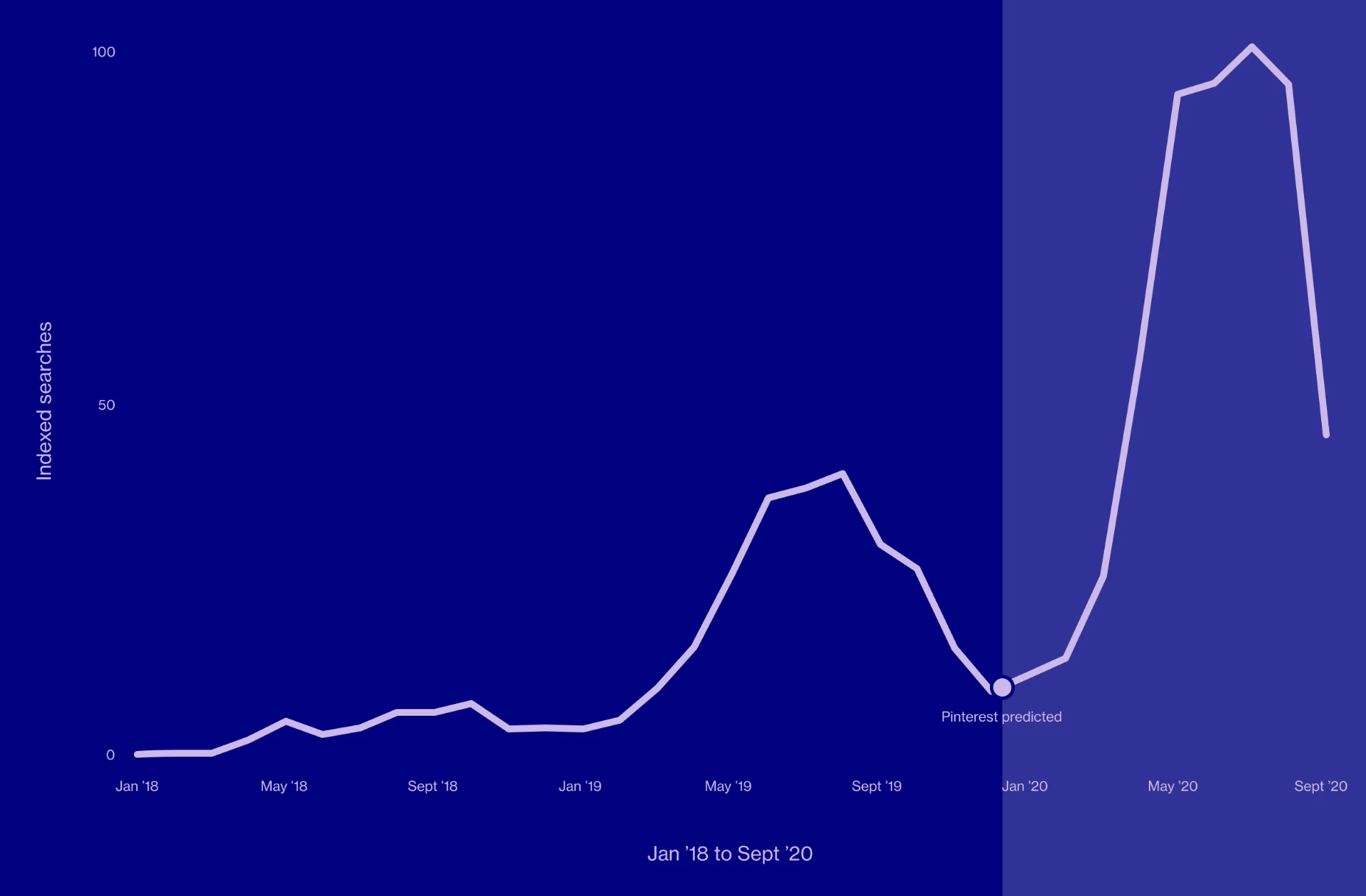
Pinterest guessed that a push for eco-friendly habits would change how we live and our choices in home decor. Following this, Thrifted home decor and solar light crafts increased in popularity, with a 130% increase in searches for thrifted home decor and a 2x increase in searches for solar light crafts.
For fashion brands, this predictive accuracy is highly valuable. Pinterest Predicts can guide editorial planning by showing which themes or aesthetics to create content around. Designers and creative directors can shape runway concepts or develop lookbooks using trending color stories. Seasonal styling direction also benefits from these insights, as commonly saved outfit combinations indicate which trends will likely influence upcoming seasons. Brands can use Pinterest data to inform influencer partnerships, choosing creators whose styles align with what consumers prefer.
Because users come to Pinterest to plan for their future outfits, seasons, weddings, and travel, their searches reveal what they genuinely want next, not just what is trending in the moment. Pinterest calls this “intentional future planning,” and it gives the platform a built-in forecasting advantage. With long-term content visibility, user-led discovery, and predictive analytics, Pinterest continues to shape the future of fashion trend forecasting. It offers a glimpse into consumer preferences months before they reach retail, making it a strategic tool for both inspiration and informed decision-making.
In the seasons ahead, Pinterest’s visual and data-driven signals will remain a dependable guide for understanding where style is headed next.
To read more, connect with me on Linkedin.




Hi Skye! I loved this blog post! Pinterest was the first form of social media I had growing up, and I still use it just as much as I used to. It is such a less stressful form of social media that does a great job of showing you what you want to see based on past things you have looked at. Going off of your point of eco-friendly trends, I use Pinterest for so many of the DIY crafts in my life. More common than not, I also see clothing or jewelry that I would not normally buy for myself, but love how it looks on my Pinterest page. Being able to see what other people create and make it into your own is so fun. I feel like Pinterest takes away so many of the parts of social media that can be stressful or overwhelming. This was a great topic to write about!
Hi Skye,
This is such a fun article to read! As someone who is in love with Pinterest and fashion this kept me locked in. I like the solar light graph you used to represent data and show results! I see a lot of fashion influencers post on TikTok about the new fashion trends. You start to notice though that those images are grabbed from Pinterest and applied to other social apps. So fun to learn and read more about. Good job!
Hi Skye! I recently “rediscovered” Pinterest and forgot how helpful it is! Your post reminded me of their prediction releases and I’m really excited for when those come out. The platform’s algorithm always impresses me when I refresh or search for new ideas and your post has inspired me to learn more about the platform. Great job!
Hi Skye! I love Pinterest and I’m so glad you gave it attention. It’s quite unique for a social media platform because while it’s social it’s also very individual. It’s great for so many ideas and can be very creative. I do wonder if it’ll make a resurgence.
Hi Skye! As an avid Pinterest user I really loved this post. I always get inspo for everything off Pinterest but I hadn’t considered the impact it has on fashion. I know it has an impact on my own fashion and outfit choices but I had never considered its effect on trends.
Hi Skye! I loved your post, it really reminded me how unique the platform is. I always forget how helpful it can be until I start scrolling again, and your breakdown made me appreciate how powerful its algorithm actually is. I also didn’t realize how much influence Pinterest has on trends until you explained it. Your post definitely made me want to use the app more intentionally. Great job!