
 by
by By: Tori Quadro
Cancel culture has become one of the most talked-about topics in our digital world. It started as a way for people online to hold others accountable, but it can also turn into public shaming and chaos fast. The big question is: Where’s the line between justice and destruction?
In the past, powerful people often got away with bad behavior. Now, social media gives everyday users the power to call out wrongdoings. Whether it’s a celebrity, brand, or influencer, anyone who crosses a moral line can face serious backlash. As Divided We Fall explains, cancel culture began as a form of activism — a way to demand accountability when traditional systems failed. But over time, it’s grown more complicated, often turning into public punishment instead of meaningful dialogue.
A good example is comedian Kevin Hart. Years after making offensive jokes on Twitter, old tweets resurfaced and sparked outrage. He lost his chance to host the Oscars and faced widespread backlash. Many felt the response went too far, arguing that people should be allowed to learn and change. Others said that accountability doesn’t have an expiration date. This divide shows how cancel culture can blur the line between accountability and revenge.
Social media has made this even more intense. Platforms like Twitter (now X), TikTok, and Instagram make outrage go viral in seconds. According to the NYC Museum Gallery, social media amplifies both the positive and negative effects of cancel culture. On one hand, it gives marginalized voices a platform. On the other, it creates echo chambers where users rush to judgment before hearing the full story. The algorithms that reward likes, shares, and views often promote outrage over empathy.
Infographic: The Effects of Cancel Culture
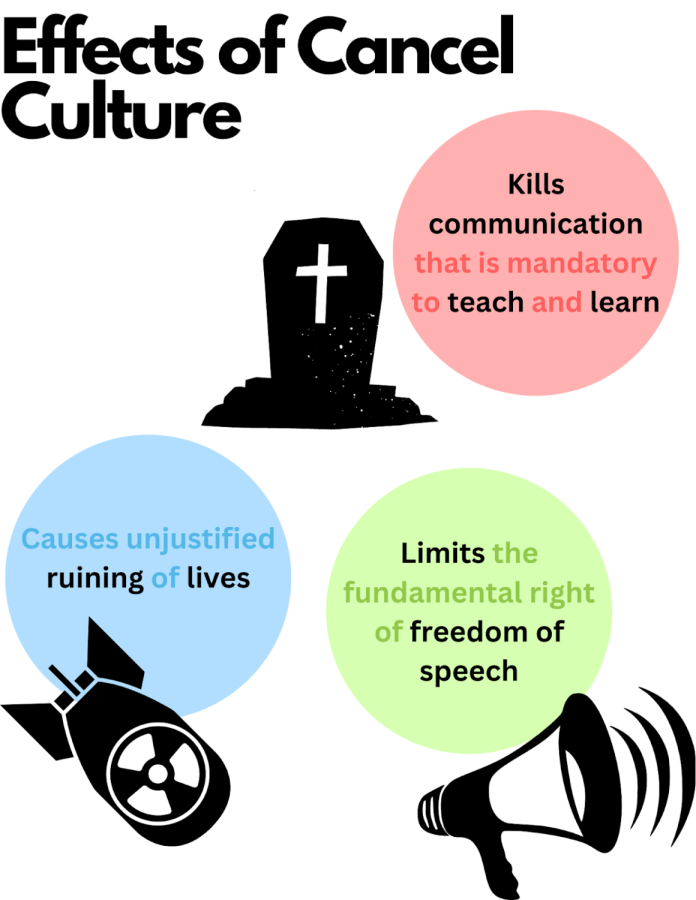
At its best, cancel culture can lead to real change. Movements like #MeToo or Black Lives Matter gained power through online communities holding people accountable and exposing wrongdoing. But at its worst, it can create a culture of fear, where people are scared to speak up, share opinions, or make mistakes because one wrong word could ruin their reputation.
In the end, cancel culture isn’t just about who gets canceled — it’s about how we respond as a society. Do we use the internet to educate, forgive, and grow? Or do we use it to shame and destroy? The future of our online world depends on whether we choose empathy over outrage.
Connect with me:




Hello, I really enjoyed your post. I often watch brands, celebrities and influencers getting cancelled online and wonder where do we as a society “draw the line?” Some creators like Trisha Paytas have been through countless scandals and are deemed as “uncancellable” online but I always wonder why. On the other hand there are celebrities like Kevin Hart that have been around for so long and have seemingly “proven” themselves to be stand up people and then they are cancelled for things that they said years and years ago. I think that the revenge aspect you brought up is very interesting and a part of cancel culture I have not really thought about yet. Thank you for your insightful post!
Hi Tori!
Your blog post brings up a great point about how cancel culture has shifted from accountability to something more chaotic. I enjoyed how you used the Kevin Hart situation as an example because it really illustrates the tension of cancel culture, showing how the internet can both demand immediate responsibility and deny people the space to evolve. Overall, well done! I had a great time reading your blog post!
Hi Tori!
I thought this was a really insightful post. I liked your point at the end on how cancel culture isn’t about who gets canceled, it’s about how we respond as society. I’ve seen so many scenarios online where people will take one wrongdoing and use it as justified leverage to pile on hate to an individual. I’ve also seen on social media how people tend to switch back and forth between sides during public feuds between influencers based on new information they receive about the situation. This shows how many people online don’t care to understand the full story before joining in on the hate. I also really liked the graphic you included in this post because it emphasizes the importance of how we respond to cancel culture.
Hi Tori!
I thought your post was very well done. This is a really thoughtful breakdown of such a polarizing topic. I think you did a great job highlighting both sides, like the genuine accountability that cancel culture can bring, versus the mob mentality that sometimes takes over. I also appreciate that you acknowledged the real positive impact of movements like #MeToo while still questioning the fear-based culture that can emerge. I personally think cancel culture can get out of hand at times, but it is definitely a tough issue to navigate, as it seems like it depends on every individual incident. Overall, great article!
Hi Tori! I really enjoyed your insight in this post, especially your comments on how cancel culture is activism that can either be used to grow or shame as a society.
Great job!