 by
by By Noah Ruth
On July 1st, 2021, the National Collegiate Athletic Association (NCAA) passed its Name, Image, and Likeness (NIL) policy. This refers to the rights that college athletes have to earn money from their personal brand without losing NCAA eligibility.
Before 2021, athletes couldn’t profit from endorsements, sponsorships, or social media content. However, the NCAA’s new NIL policy change allows them to sign deals with brands, appear in commercials, promote products on social media, and even launch their own businesses.
According to Business of College Sports (Dosh, 2025), roughly 72% of NIL deals now involve social media promotion, primarily through Instagram and TikTok. Student athletes have become what the public calls a “micro-influencer,” often earning thousands of dollars from sponsored posts or product endorsements.
“The most valuable athletes aren’t always the ones on national TV,” said Kristi Dosh, founder of Business of College Sports, in a recent NIL trends report. “They’re the ones who post consistently, connect authentically, and can drive real engagement in their communities.”
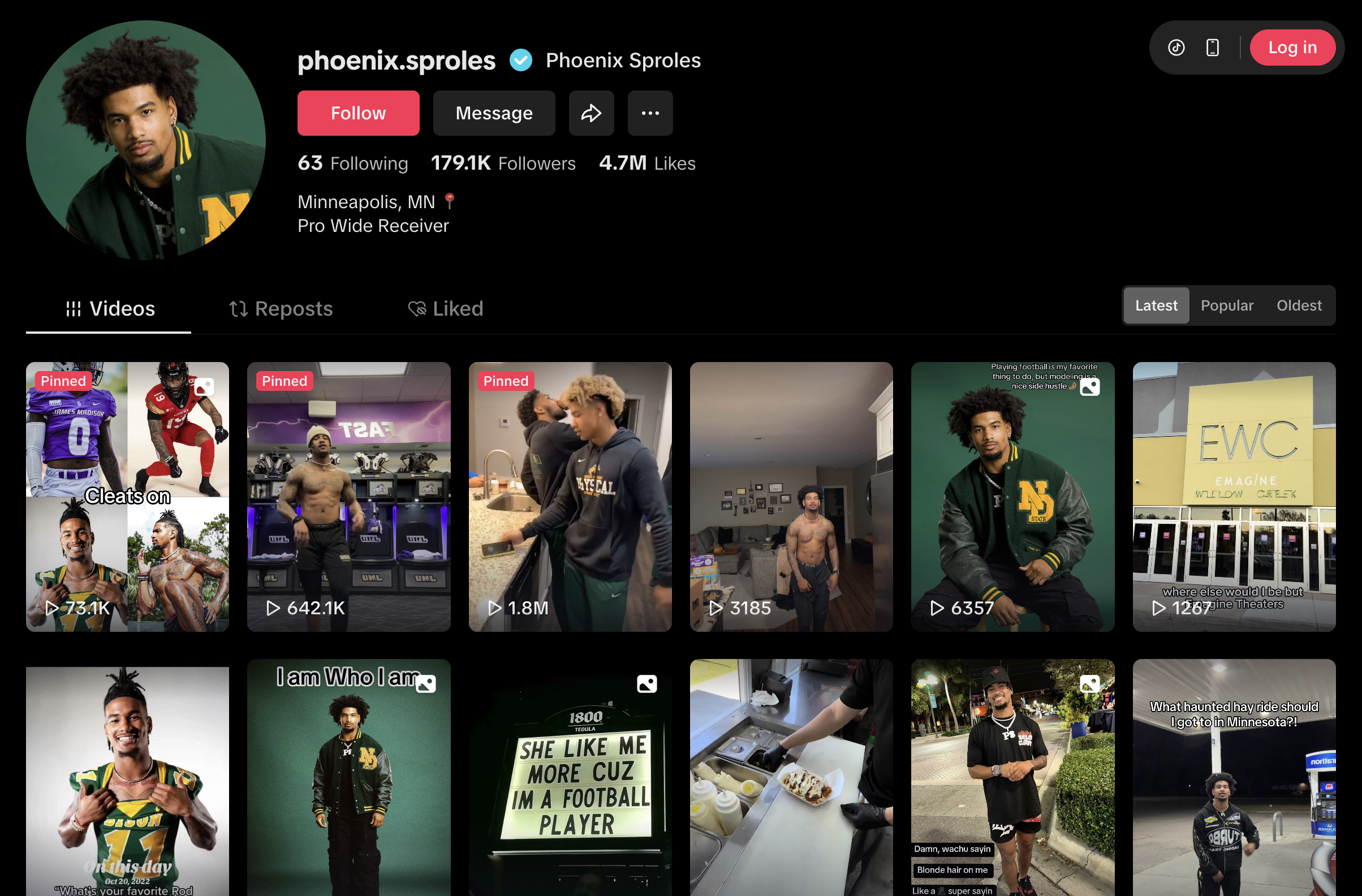
Not only are the big-name stars from college basketball or football who are making the big bucks, but many mid-tier athletes with niche audiences are proving to be some of the most effective brand partners. For example, North Dakota State University wide receiver Phoenix Sproles used his football status and a large TikTok following (over 175,000 followers) to land endorsement deals. While he didn’t receive six-figure contracts, he earned about $12,000 in the first year of NIL.
Benefits
According to Forbes Magazine, social media gives athletes a platform to expand their personal brand, showcase their story, and build a following. These skills can translate into post-college career opportunities.
ESPN’s Jay Bilas states that with NIL deals, athletes engage in contract negotiation, tax implications, and influencer content. This benefits these athletes in the long run by teaching them the business skills they need to have a stable career.
Issues
According to NIL Store Blogs, a major issue is that while some athletes rake in millions, others struggle to secure deals. NIL earnings are often tied to an athlete’s sport, position, and social media following, which means that not all players benefit equally. This can create disparities among teammates and lead to tensions within locker rooms.
Another issue includes the increase in pressure and distractions, on top of academics and athletic performance, these athletes now have the weight of managing NIL responsibilities. Some athletes feel pressured to constantly create content, maintain sponsorship obligations, and manage business deals. The added workload can take a toll on mental health and academic performance.
Connect with me: https://www.linkedin.com/in/noah-ruth-3243b8253/
References:




Great writeup!
I think it’s interesting that student athletes now need to be part-influencer, on top of their other responsibilities. Like you said, I can’t imagine how much extra work that already places on them. I do see how it can be beneficial for less well-known athletes, especially those who might not go pro in their respective sport!
Hey Noah! Great job explaining the impact of NIL and social media really clearly. I like how you showed that it’s not just the star athletes benefiting, but also the ones who build real engagement online. Your examples made it easy to understand how athletes are becoming influencers and why brands value that. You also balanced the benefits and issues well, especially when you talked about added pressure and uneven opportunities. Overall, great article, it was super easy to follow and gave a good look at how NIL is shaping college sports.