 by
By Izzi Lipari Maxson
Fake news is not a new development. When scrolling through social media, there has always been false information, but people were better able to instinctively discern what was real. As AI becomes more prevalent, it is harder to believe the majority of what comes onto your feed. We’ve all had the moment. When your parents send you something, and you have to break it to them that it’s AI. Or even worse, you may have been the one to fall for it and sent a post to someone else, only to later realise it was fake.
A survey of over 5,000 U.S. adults conducted by the Pew Research Center shows that 76% of people find it difficult to tell whether pictures, videos, and text are made by AI. It also showed that 53% of the adults surveyed are not confident in their ability to detect AI, and 50% are more concerned than excited about the increase in AI use in daily life. This is an increase from 37% in 2021.
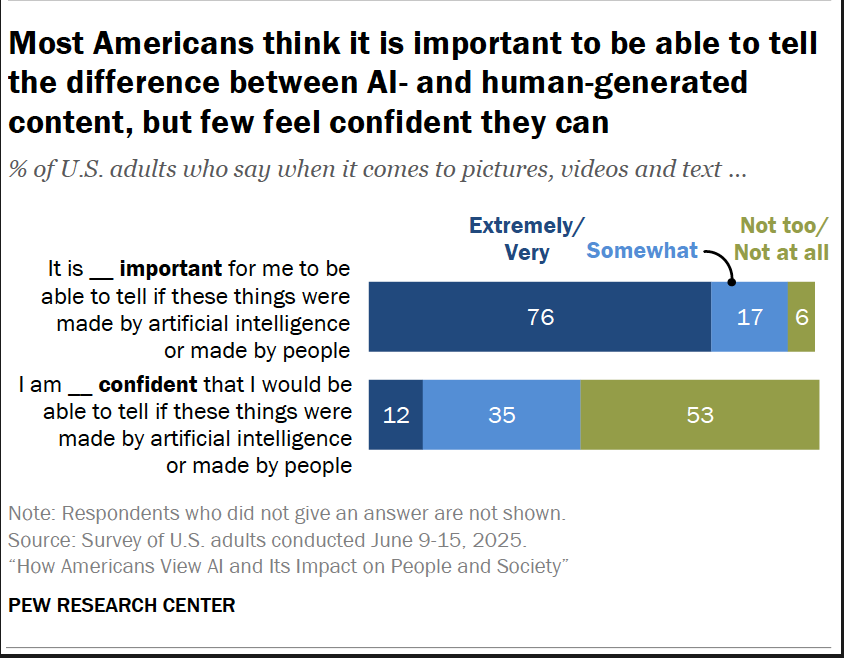
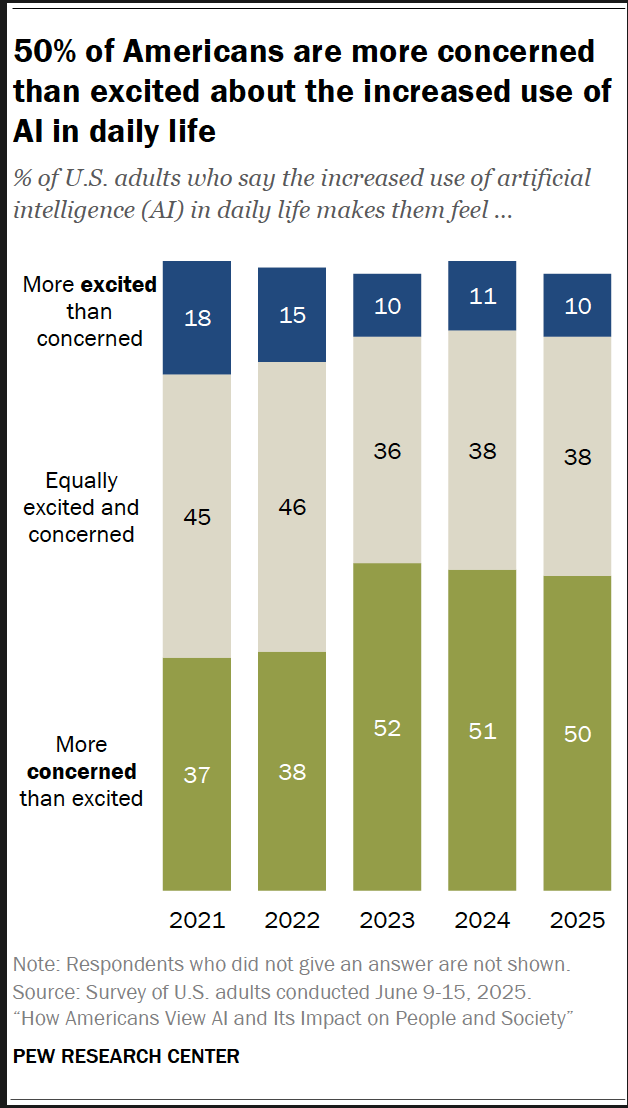
Graphs from Pew Research Center Survey Data
We as consumers care about what is real, but we don’t trust our ability to detect the truth. The tension isn’t with people using AI, but with wanting to have more control over it. People are not opposed to using it for day-to-day tasks like asking Google how to make cookies, but they want to know when it is being used. When it gets into social media is where the trust in content gets complicated. Pew found that many adults under the age of 30 have read more about AI and are more skeptical about its effects. Many of those younger adults believe that the use of AI makes people worse at creative thinking and forming meaningful relationships.
Going into a field that is creative and has a lot to do with promoting on social media, especially to the younger, more sceptical generations, it is important to disclose your AI usage to remain transparent and give viewers the sense of control they need.
Trust used to be the default online, but has now become something that has to be earned post by post. I think the creators and brands that will succeed are the ones that don’t use AI, or if they do, they are honest about how their content was made, because that is what viewers are asking for.
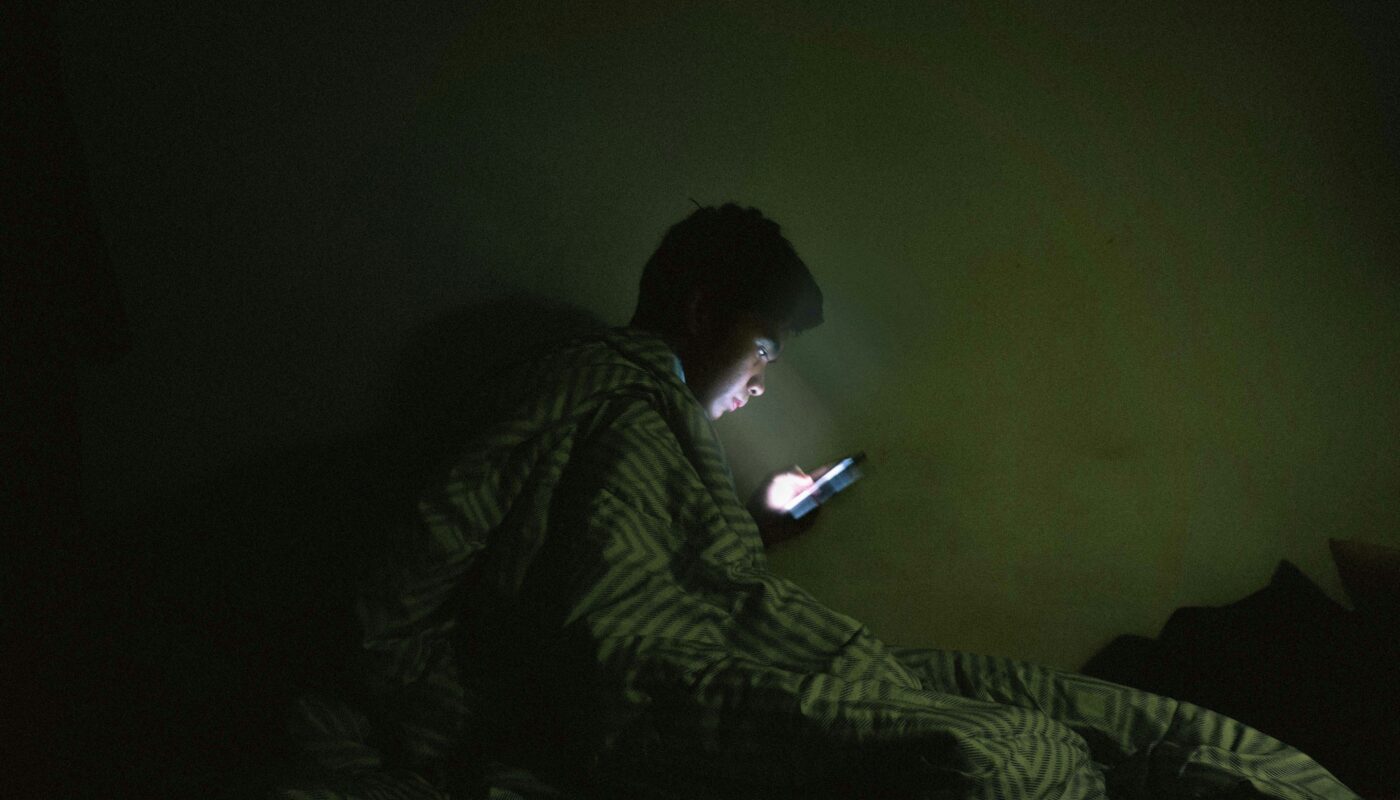
Photo Credit: Dipqi Ghozali– unsplash.com
Infographic Credit: pewresearch.org
Connect with me on LinkedIn


Hey Izzi,
I really liked how you used statistics from Pew Research Center to backup your claims because this makes the argument much more convincing. I also really like that you chose this topic because it is such a relevant issue now, with AI, and in the past without AI. I also really liked your line about trust being the default online, because this is so true, not only in this age of AI but also with influencers and strong social media influences in general.